If you are buying in Highland Beach, hurricane readiness is not a bonus feature. It is part of the baseline. On a barrier island where the town identifies mandatory evacuation for a Category 2 or stronger storm, buyers tend to look closely at how a property is built, protected, and documented before they get comfortable moving forward. Let’s dive in.
Why hurricane upgrades matter in Highland Beach
Highland Beach has a very specific risk profile. According to the town’s 2024 documents, it is a mandatory evacuation zone for stronger storms, and buildings may lose water and power during an evacuation event. The town’s appraisal report also notes that about 82% of land is in a Special Flood Hazard Area, with 40.8 acres in a Coastal High Hazard Area. You can review those local conditions in the Town of Highland Beach hurricane and appraisal materials.
For you as a buyer, that changes the conversation. In many markets, storm upgrades feel optional or cosmetic. In Highland Beach, they are often part of basic due diligence because they can affect safety, insurability, maintenance planning, and resale appeal.
Impact-rated openings are near the top
One of the first things buyers usually ask about is opening protection. Florida’s hurricane retrofit guidance explains that broken windows or doors can increase internal pressure and contribute to roof uplift, which is why protecting all openings matters so much. That is why impact-rated windows, sliding glass doors, entry doors, and other protected openings tend to be high on buyer checklists.
The state guidance also notes that tested shutters or impact-resistant windows and doors may help support windstorm insurance discounts when properly documented. If you want the technical background, the Florida Disaster Hurricane Retrofit Guide on openings outlines why these features matter.
What buyers often look for
When you tour a Highland Beach property, the most attractive setups often include:
- Impact-rated windows
- Impact-rated sliding glass doors
- Impact-rated entry doors
- Documented opening protection throughout the home
- A recent wind mitigation inspection report
A partial upgrade can still help, but buyers tend to prefer consistency. If one set of openings has been upgraded while another has not, it can create questions during inspections and insurance review.
Garage doors matter more than many buyers expect
Garage doors are easy to overlook, especially in homes where ocean views and interior finishes get most of the attention. But from a storm-readiness standpoint, they deserve serious attention. Florida retrofit guidance warns that when a windward opening fails, pressure inside the home can rise quickly and increase roof stress.
That is why buyers often view a hurricane-resistant garage door or approved bracing as a meaningful upgrade, not a minor detail. In practical terms, a strong garage door can support the overall envelope of the home and reduce one more point of concern during due diligence.
Roof upgrades usually carry the most weight
If there is one hurricane-ready feature that tends to stand out most, it is the roof system. The Florida Department of Financial Services says that securing the roof and protecting windows are the two most cost-effective hurricane loss mitigation steps. Their consumer guide highlights code-compliant roof coverings, roof-deck attachment, roof-to-wall clips or straps, hip roofs, and secondary water resistance as features that may qualify for wind mitigation discounts. You can review that in the DFS hurricane mitigation discount guide.
For buyers, roof questions usually go beyond age alone. A newer roof is helpful, but buyers also want to know how it was installed, whether it meets code, and whether there is documentation to support any mitigation credits.
Roof features that stand out to buyers
The most reassuring roof-related features often include:
- Florida-code-compliant roof covering
- Strong roof-deck attachment
- Roof-to-wall clips or straps
- Secondary water resistance
- Hip roof design, where applicable
- Clear documentation from a wind mitigation inspection
DFS also notes that homes built to the 2001 Florida Building Code or later may automatically qualify for a minimum 68% discount on the windstorm portion of the premium, although actual savings vary based on documented features. For many buyers, that makes documentation almost as important as the upgrade itself.
Flood resilience starts with elevation and compliance
In Highland Beach, wind is only part of the story. Flood exposure is also central because so much of the town lies within mapped flood hazard areas. FEMA explains that in A zones, new or substantially improved residential structures must have the lowest floor elevated to or above the base flood elevation. FEMA also states that residential floodproofing below the base flood elevation is generally not allowed, and it is not allowed in Coastal High Hazard Areas. You can explore those standards on FEMA’s floodplain risk management page.
This matters because buyers sometimes hear the word “floodproofing” used loosely. In residential coastal settings, what usually matters more is proper elevation, compliant design, flood openings where required, and the location of utilities and mechanical systems.
Flood-related details buyers should verify
Before you buy, it is smart to ask about:
- Elevation relative to base flood elevation
- Whether an elevation certificate is available
- Placement of utilities and equipment above required levels, where applicable
- Flood openings in enclosed areas below elevated homes
- Whether lower enclosed areas are limited to parking, access, or storage when required by code
FEMA also makes clear that garage doors do not satisfy the National Flood Insurance Program opening requirement. That is a detail many buyers do not know, but it can become important during inspections, permitting review, and insurance conversations.
Backup power is a practical amenity
Because Highland Beach’s hurricane guidance says buildings may lose power and water during evacuation events, backup power has practical appeal in this market. For many buyers, especially in luxury coastal property, backup power is not just about convenience. It can support comfort, refrigeration, communication, and basic continuity after a storm event when conditions allow re-entry.
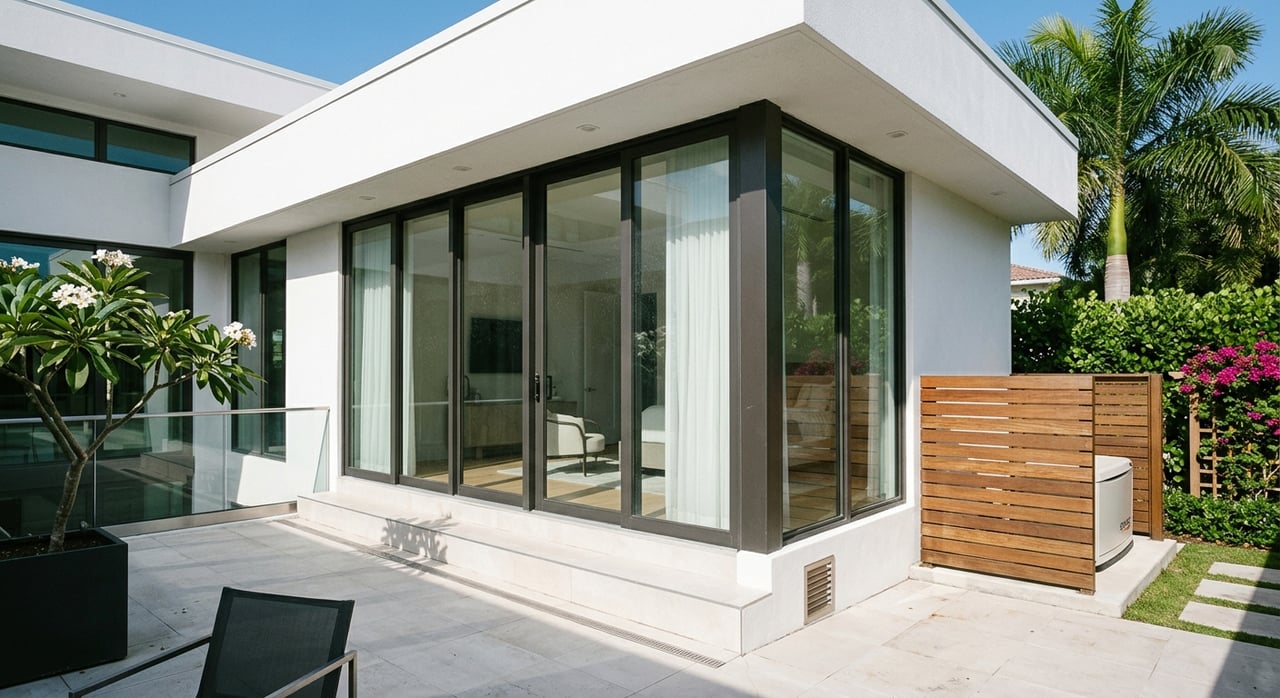
That said, safety matters. FEMA guidance says portable generators must be used outdoors at least 20 feet from the home, never indoors, and never connected directly to the home’s electrical supply. Buyers should treat backup power as a system to understand clearly, not just a line item in marketing remarks.
Condo buyers should ask different questions
In Highland Beach, condo inventory plays a major role in the market, so hurricane readiness is often both an individual unit issue and a building-wide issue. A beautiful unit may still leave open questions if the larger building has not addressed key mitigation items such as openings, roof components, or water-intrusion measures.
Florida’s My Safe Florida Condominium Pilot Program provides free inspections and reimbursable grants for eligible coastal condo associations. Eligible improvements can include exterior doors, garage doors, windows or skylights, roof-to-wall connections, roof-deck attachment improvements, secondary water resistance, and roof-covering replacement. The program applies to qualifying coastal condo buildings and requires approval steps at the association level.
Questions condo buyers should ask
If you are considering a condo, ask for clarity on:
- Whether the association has completed a wind mitigation inspection
- Whether the building has impact-rated windows or approved opening protection
- Any recent roof or envelope improvements
- Whether the association has pursued available mitigation programs
- The status of required building compliance items tied to grant eligibility
These questions can help you understand not only the condition of the building, but also how proactive the association has been.
Documentation can reduce buyer friction
In Highland Beach, upgrades are important, but paperwork is often what keeps a transaction moving. A home that has impact-rated openings and a strong roof system is more compelling when the seller can also provide a current wind mitigation report, an elevation certificate where relevant, and records of completed improvements.
Florida’s insurance framework also reinforces that point. The state requires insurers to offer wind-mitigation discounts, and the Florida Office of Insurance Regulation homeowners insurance page notes the importance of mitigation documentation in the underwriting process. For buyers, that means a well-documented property may feel easier to insure and easier to evaluate.
What this means for resale value
The smartest way to think about resale in Highland Beach is not as a guaranteed price bump for every storm-ready feature. The more defensible view is that hurricane-ready upgrades can help create a lower-risk, easier-to-insure, lower-friction listing. In a barrier-island market, that can matter a great deal.
Buyers are often willing to pay more attention to homes that already address common concerns. When a property has protected openings, a strong documented roof system, elevation-related clarity, and supporting reports, it may stand out for practical reasons that go beyond aesthetics.
How to evaluate upgrades before you buy
A smart Highland Beach purchase usually includes both visual and technical review. It is not enough to hear that a home is “storm ready.” You want to know which components were upgraded, when they were installed, whether they meet current standards, and what paperwork supports those claims.
A simple review process can help:
- Confirm opening protection for windows, doors, sliders, and garage doors.
- Review roof age, roof type, and mitigation features.
- Ask for a wind mitigation inspection report.
- Request an elevation certificate if the property is in a flood hazard area.
- Verify how utilities and equipment are positioned.
- For condos, review building-level mitigation and association planning.
In a market like Highland Beach, that kind of disciplined review helps you make a more confident decision.
A practical approach for Highland Beach buyers
The best coastal purchases balance lifestyle, design, and resilience. Ocean views and polished interiors matter, but buyers in Highland Beach also tend to focus on the features behind the walls, above the ceiling, and around the building envelope.
If you want help evaluating hurricane-ready upgrades, comparing risk factors, or understanding which improvements may reduce friction during purchase and ownership, working with an advisor who understands both construction details and local market expectations can make the process much smoother. When you are ready, connect with Alan Abramson for thoughtful guidance on buying or selling in Highland Beach and across the South Florida coast.
FAQs
What hurricane-ready upgrades do Highland Beach buyers expect most?
- Buyers in Highland Beach often focus first on impact-rated windows and doors, protected garage doors, roof mitigation features, and documentation such as a wind mitigation report.
Why do garage doors matter for Highland Beach homes?
- Florida hurricane guidance notes that failed openings can increase internal pressure and roof uplift, so a reinforced or hurricane-rated garage door can be an important part of the home’s protective envelope.
Do floodproofing upgrades work for Highland Beach residential property?
- In many cases, FEMA guidance emphasizes elevation and compliant design rather than residential floodproofing below base flood elevation, especially in Coastal High Hazard Areas.
What documents should Highland Beach buyers request during due diligence?
- Buyers should consider asking for a wind mitigation inspection report, an elevation certificate if relevant, and records for impact-rated openings, roof work, and other completed mitigation upgrades.
What should condo buyers in Highland Beach ask an association?
- Condo buyers should ask about building-wide wind mitigation inspections, impact-rated openings, roof or envelope improvements, and whether the association has pursued eligible hurricane mitigation programs.
Can hurricane-ready features help with insurance in Highland Beach?
- Yes. Florida requires insurers to offer wind-mitigation discounts, and documented features such as protected openings and roof improvements may help support available credits, depending on the property.